For decades, cats have lived at the heart of our homes while remaining somewhat in the background of animal welfare legislation. Compared to dogs, protections have often been less visible, less consistent, and less enforced.
That may now be changing.
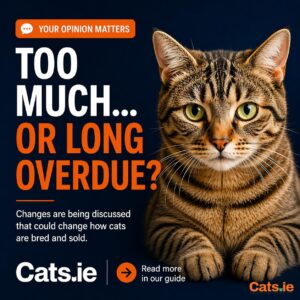
Across Europe, policymakers are working toward the first EU-wide legal framework focused specifically on the welfare and traceability of cats and dogs. While still moving through the final stages of adoption, the direction is already clear — and it signals a meaningful shift.
At the same time, Ireland is developing its own Animal Welfare Strategy 2026–2030, suggesting that national and European efforts are beginning to align.
🐾 “For the first time, cats are moving from being largely untracked… to potentially becoming fully traceable animals within a regulated system.”
The Big Shift: From Invisible to Traceable Cats
One of the most important changes lies in a concept that has long been missing for cats: traceability.
Unlike dogs, cats in Ireland are not universally required to be microchipped. This creates gaps — not only in reuniting lost pets, but in understanding where cats come from in the first place.
Under the expected EU framework, cats may increasingly need to be:
- Microchipped before sale or transfer
- Registered in recognised databases
- Linked to identifiable breeders, sellers, or organisations
This would represent a fundamental shift — from a largely informal system to one where every cat has a traceable origin and history.
Breeding Standards: Raising the Bar Across Europe
Another key pillar of the proposed changes is the introduction of stricter breeding standards.
The intention is not to restrict responsible breeding, but to eliminate harmful practices that compromise animal welfare.
Expected measures include:
- Restrictions on close inbreeding
- Limits on breeding frequency
- Rules preventing continued breeding after multiple caesarean sections
- Greater oversight of breeding establishments
- Mandatory knowledge or training requirements for breeders
There is also increasing focus on extreme physical traits — characteristics that may be visually distinctive but can negatively impact a cat’s health.
🐱 “The future of breeding in Europe is not about producing more cats — it’s about producing healthier ones.”
The Online Revolution: Where the Biggest Changes May Happen
Perhaps the most significant transformation will take place where most people least expect it — online.
Today, a large proportion of pet sales happen through digital platforms. While this has made access easier, it has also created space for unverified sellers and unclear animal origins.
This is where regulators are now focusing their attention.
Future rules may require platforms to:
- Verify microchip and registration details
- Display transparent seller information
- Provide responsible ownership guidance
- Ensure listings comply with stricter welfare-based standards
In practical terms, this means online listings may evolve from simple ads into structured, accountable ecosystems.
💻 “The days of anonymous kitten listings may be numbered.”
Ireland’s Role: Not Starting From Zero
Ireland already has a regulatory foundation in place.
Since 2020, legislation has governed the sale, supply, and advertising of pets, particularly for those operating at scale. This means Ireland is not entering this new era unprepared.
However, the EU framework is expected to raise expectations significantly, particularly in areas like:
- Traceability
- Digital compliance
- Breeder accountability
At the same time, the upcoming Animal Welfare Strategy 2026–2030 suggests further national developments are on the horizon.
What This Means for Cat Owners
For everyday cat owners, these changes could bring real benefits:
- Greater confidence when adopting or buying a cat
- Improved ability to trace a cat’s origin
- Better systems for identifying and recovering lost pets
- Stronger protection against unethical breeding practices
In short, a more transparent and trustworthy system.
What This Means for Breeders, Shelters, and Platforms
For breeders and shelters, the future will likely involve:
- Clearer standards
- Increased responsibility
- Greater accountability
But also an opportunity to stand out through compliance and transparency.
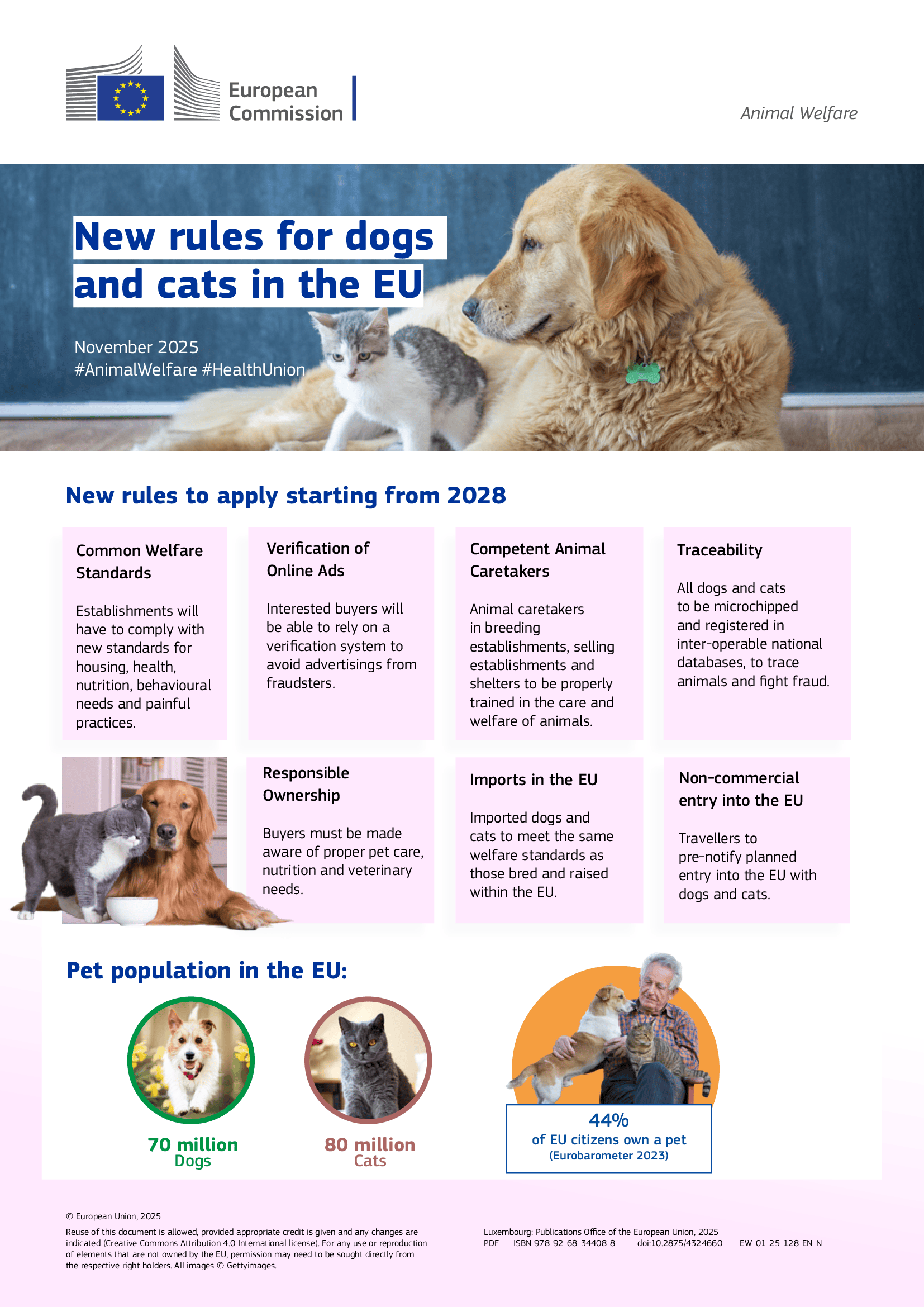
For platforms, the shift could be even more profound.
As regulation evolves, platforms may need to move beyond simple listings and become:
- Verification systems
- Trust-building environments
- Bridges between sellers, shelters, and adopters
🚀 “The platforms that adapt early to traceability and transparency may define the future of pet adoption and sales.”
Timeline: When Will This Happen?
While exact timelines depend on final EU adoption and implementation:
- Formal adoption: expected around 2026
- Full implementation: likely phased, extending toward ~2028
This gives a short but critical window for adaptation.
Conclusion: A System Built on Trust
The direction is clear.
The future of cat welfare in Ireland — and across Europe — is moving toward a system built on:
- Traceability
- Responsibility
- Transparency
For cat owners, this means greater protection.
For breeders and organisations, higher standards.
And for platforms, a chance to become part of the infrastructure that supports this new reality.
For the first time, cats are not just part of the conversation — they are becoming central to it.