
With shelves full of choices — tins, kibble, pouches, and now raw — what’s truly best for your cat’s health and happiness? Here’s how to feed like a pro without overthinking every bowl.
You open the cupboard and there it is — a small mountain of cat food. Pouches with “tuna in jelly,” bags of “high-protein chicken,” a fancy tin promising “gourmet instinctive pâté.” Meanwhile, your cat is sniffing everything as if deciding whether to sign a treaty. Feeding your cat should be simple. But between marketing buzzwords and evolving science, it’s easy to get lost in the noise. So let’s strip it back to the basics — and figure out what really matters.
Start with Nature — Cats Are True Carnivores
Cats are obligate carnivores, which means they must eat meat to survive. Their bodies are designed to get protein and fat from animal sources — not from grains or vegetables. In the wild, a cat’s diet is roughly 70% water, high in protein, moderate in fat, and low in carbohydrates. So, your goal as an owner is simple: replicate nature as closely as possible, within your lifestyle and budget.
Wet Food — Hydration in Every Bite
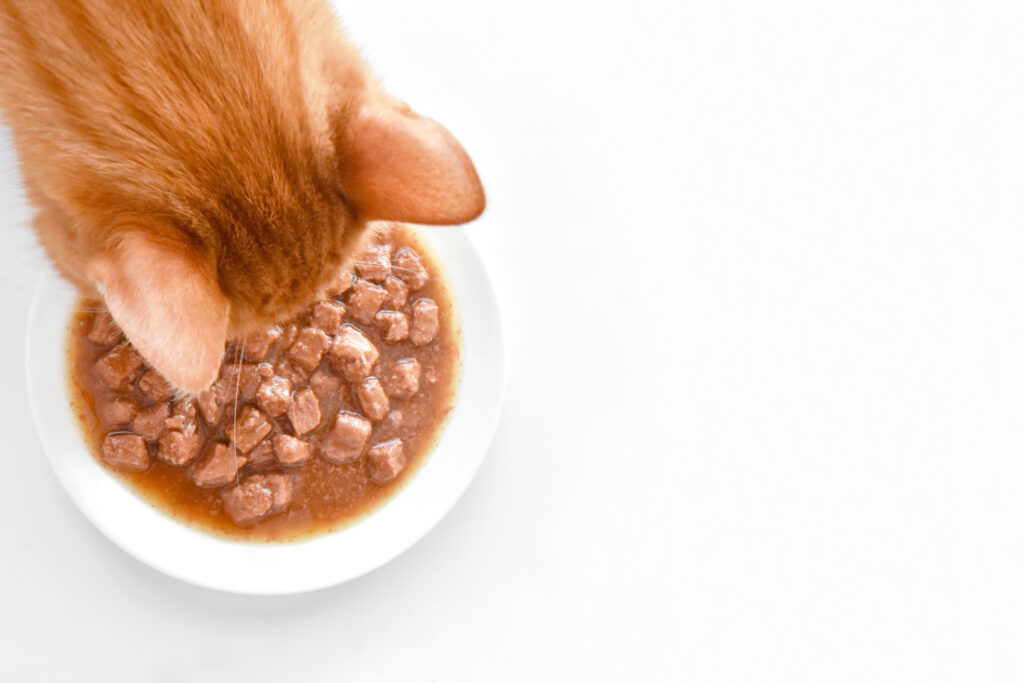
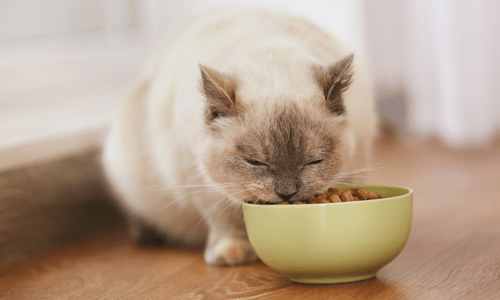
Wet food contains about 70–80% moisture, which makes it ideal for supporting
your cat’s urinary and kidney health — especially important for older cats or
those prone to urinary infections.
| Pros: | Cons: |
|---|---|
| Keeps cats hydrated (many won’t drink enough water) | Costs more per portion |
| Easier to chew for kittens and seniors | Spoils quickly after opening |
| Rich aroma encourages picky eaters | Can’t be left out all day |
🧠 Vet Tip (Dr. Eimear Donnelly, DVM)
“I always recommend at least one wet meal per day. It’s the simplest way to protect kidney health — and most cats love it.”
Dry Food — Convenience and Crunch
Dry food (kibble) has its place too — and for many Irish homes, it’s a daily staple.
It stores well, is less expensive, and provides consistent nutrition. The key is quality. Not all kibble is equal.
Look for:
• Named meat source (e.g. chicken or salmon, not “meat derivatives”)
• Protein over 30%
• Low carbohydrate content (<20%)
• Added taurine, Omega-3s, and balanced minerals
A mix of dry and wet often gives the best of both worlds. What to avoid? Free- feeding (leaving dry food out constantly). It can lead to overeating, boredom, and obesity.
Raw Food — The Natural Option (If Done Right)
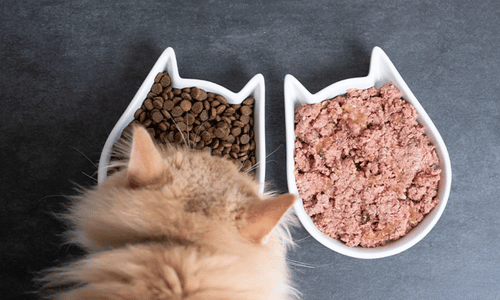
Raw feeding — or BARF (“Biologically Appropriate Raw Food”) — has become increasingly popular in Ireland. Done properly, it can offer benefits: shinier coats, smaller stools, and higher energy. Done wrong, it can lead to bacteria exposure and serious nutrient imbalances.
If you’re interested in raw:
• Use commercial, FSAI-approved raw brands (not DIY mixes)
• Handle like raw meat — store separately, clean surfaces, wash hands
• Never mix raw and cooked food in the same bowl
• Consult your vet before transitioning
🧠 Nutritionist Note (Aoife Byrne, Feline Diet Specialist):
“Raw food can be brilliant — but not without education. Cats need precise ratios of meat, bone, and organ. It’s science, not guesswork.”
Raw feeding suits owners who are organised, consistent, and confident. If you’re not sure, a mixed approach (raw in rotation with wet) can still deliver benefits safely.
Mixed Feeding — Balance in the Bowl
For most cats, a combination of wet and dry is the sweet spot — hydration from wet food, plus dental and texture variety from dry. It also helps manage fussiness. Try this:
• Morning & evening: wet food
• Midday or overnight: measured dry portion
That rhythm mimics natural hunting — small, frequent meals instead of one large feast. If you’re including raw, serve it separately and never mix in the same sitting.
Treats, Snacks & “Extras”
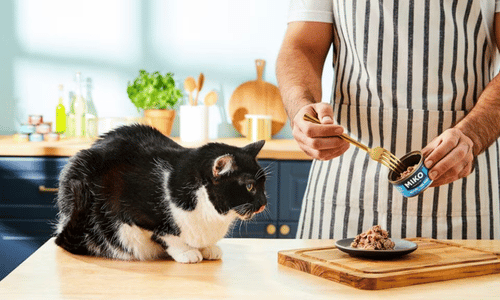
Treats are part of the joy — but moderation is key. They should make up no more than 10% of daily calories.
| Best treats: | Cons: |
|---|---|
| Freeze-dried meat (pure protein) | Milk (most cats are lactose-intolerant) |
| Small bits of cooked chicken or fish | Dog food (different nutritional balance) |
| Catnip biscuits (in moderation) | High-carb snacks (often full of sugar or grain) |
And remember: praise and playtime are the healthiest “treats” of all.
Watch Your Cat — Not the Label
Marketing loves buzzwords: “natural,” “premium,” “instinctive,” “gourmet.” But your cat doesn’t read packaging — they communicate results.
The best diet is the one that keeps your cat:
• At a healthy weight
• Energetic and curious
• With glossy fur, clear eyes, and firm stools
If you see dull coat, lethargy, or sudden changes in appetite, revisit diet with your vet. Each cat is an individual — there’s no perfect universal plan.
Final Thought
Feeding your cat well isn’t about perfection — it’s about attention. Whether you’re scooping kibble or defrosting a raw meal, what matters most is consis- tency, quality, and love in the routine. A happy, healthy cat is the best proof that you’re doing it right. And if you ever feel lost? Cats.ie is here to help — because we believe every bowl should be filled with both nourishment and care.