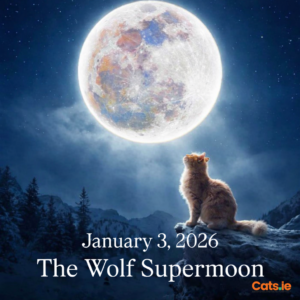

As Ireland steps into the first days of 2026, the night sky offers a striking natural spectacle: the Wolf Supermoon. Visible on the nights of January 2nd and 3rd, this will be the first full Moon of the year and one of the brightest and largest Moons we’ll see for some time.
For many people, celestial events spark curiosity — and sometimes concern — about whether they affect animals. Cats, with their mysterious habits and nighttime energy, are often at the centre of these questions. So what exactly is the Wolf Supermoon, and does it really have any impact on our feline companions?
Let’s look at the science, the folklore, and what cat guardians in Ireland should know.
🌙 What Is the Wolf Supermoon?
The term “Wolf Moon” is simply the traditional name for January’s full Moon. It comes from Northern Hemisphere folklore, where long winter nights were associated with wolves howling outside villages during the coldest months of the year. Despite the evocative name, it has no connection to wolves behaving differently — it’s a cultural label, not a biological one.
The “supermoon” part refers to timing. The Moon follows an elliptical orbit around Earth, and when a full Moon occurs near its closest point to us — known as perigee — it appears noticeably larger and brighter in the sky. A supermoon can look up to 14% bigger and 30% brighter than an average full Moon, especially when rising low on the horizon.
🇮🇪 When and Where to See It in Ireland
In Ireland, the Wolf Supermoon will be best observed from sunset onward on Friday, January 2nd, and Saturday, January 3rd, 2026. The peak moment occurs around 10:03 UTC on January 3rd, but the Moon will remain impressive throughout the evening and night.
Clear winter air often makes January Moons appear particularly sharp and luminous. Coastal areas, countryside locations, and places away from city lights will offer the clearest views — though even urban skies should still provide a striking sight.
Adding to the interest, this supermoon coincides with the Quadrantid meteor shower, one of the strongest meteor showers of the year. While the bright Moon may wash out fainter meteors, brighter fireballs are still possible, especially after midnight in darker locations.
🐾 Does the Wolf Supermoon Affect Cats?
This is where science provides reassuring clarity.
There is no evidence that full Moons or supermoons:
• affect feline health,
• change hormones,
• or cause lasting behavioural changes.
However, cats are naturally crepuscular and nocturnal, and they are highly sensitive to light. A brighter night can make the outdoors — and even window-lit rooms — more stimulating.
As a result, some cats may:
• appear slightly more alert at night,
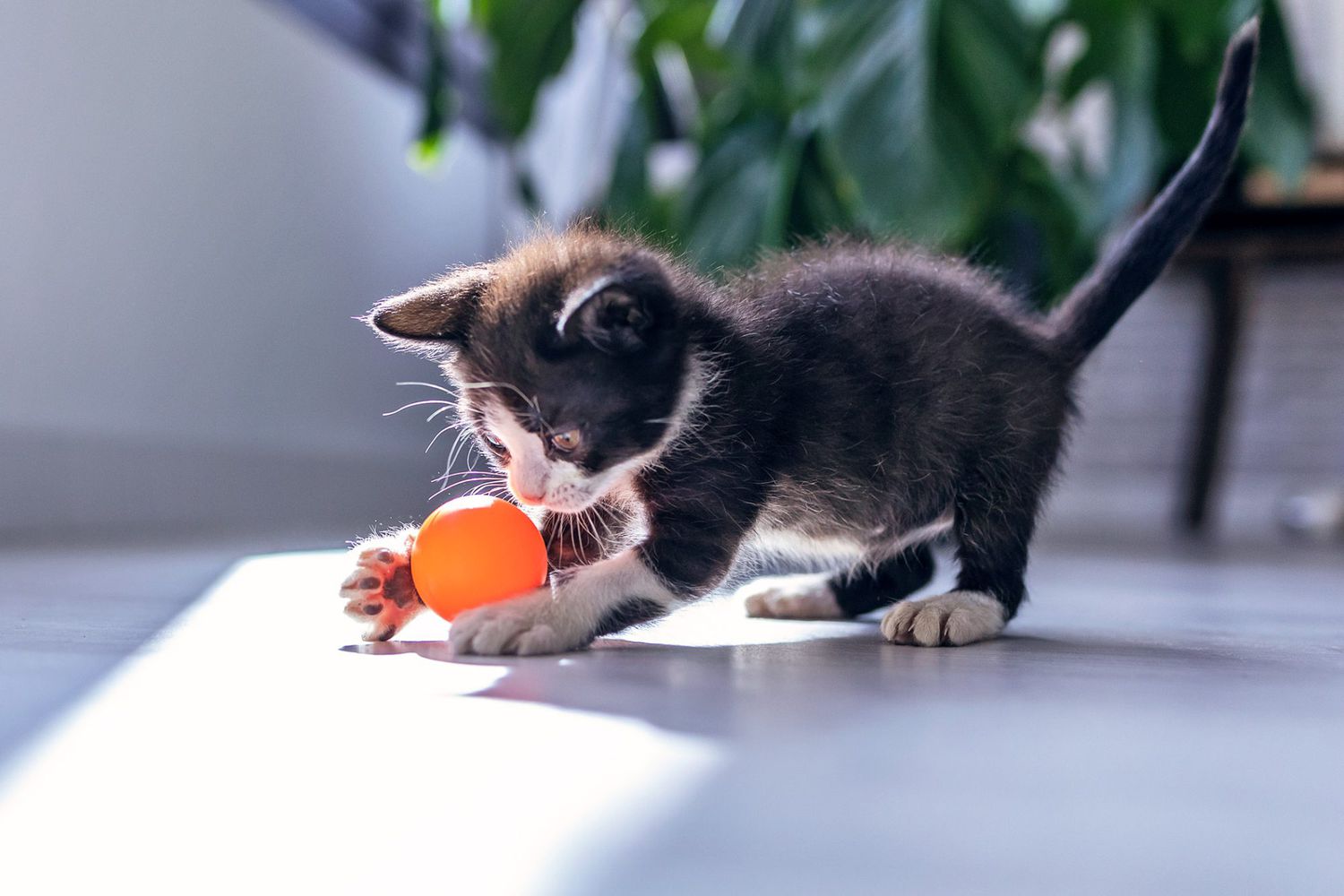
• play or explore more after dark,
• experience occasional late-night “zoomies”.
This isn’t caused by lunar gravity or mystical forces — it’s simply a response to increased light levels.
Indoor cats may spend more time watching reflections or gazing out windows, while outdoor cats may remain active a little longer than usual. These changes are typically mild, harmless, and short-lived.
🐱 What Cat Guardians Should Keep in Mind
For most households, the Wolf Supermoon requires no special precautions. Maintaining normal routines — feeding, playtime, and bedtime — helps cats feel secure, even on brighter nights.
Any temporary change in behaviour is usually:
• subtle,
• brief,
• and related to environmental light, not the Moon itself.
If your cat seems extra playful or curious after dark, it’s perfectly normal — and often quite charming.
🌕 A Calm and Beautiful Start to 2026
The Wolf Supermoon offers Ireland a peaceful and fascinating way to begin the year. Whether you step outside to admire the Moon with a warm coat and a cup of tea, or notice your cat quietly watching the night from a windowsill, it’s a reminder that natural rhythms continue calmly above us.
Rooted in both folklore and science, this lunar event is best enjoyed with curiosity rather than concern.
Happy stargazing from Cats.ie — where understanding always comes before worry 🐾✨